СТАТУС ИГРЫ
C
Да, стоит играть
Серьёзных проблем нет, минусы описаны ниже
Почему оценка C: мнения разделились: недовольных почти столько же, сколько довольных
Данные SteamОбновлено 1 час назад
Серьёзных проблем нет, минусы описаны ниже
Почему оценка C: мнения разделились: недовольных почти столько же, сколько довольных
2
945 дней назад
100% положительных
Русского нет · всего 12 языков
179 руб.
Сравним с вашим ПК и прикинем FPS
Подробных отзывов на русском мало - добавлены отзывы на других языках.
Отлично! Напоминает старый добрый Elder Sign от Fantasy Flight Games, который, в свою очередь, брал за основу главной геймплейной механии классический покер на кубиках. Зайдёт так же фанатам Slice and Dice. За 50% рекомендую!
Another iteration of Right and Down, this time with a dice. You've got basically 6 classes and 5 difficulty levels. One of the classes is significantly harder to win with than the rest, but thankfully nobody's forcing you to play with that. I liked the variety of the items, and to be honest there wasn't exactly a balanced array of them, so luck played a major role sometimes, but in the end i think that strategy can get you as far as you want, once you understand how things work. It's easy to learn at the start and from then on you only have to focus a bit on the enemy details and it's a fun adventure to be had. I hope they make another one. Recommended to all.
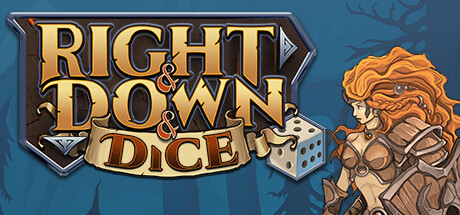
Right and Down and Dice is a compact roguelike that demonstrates how restrictive rules can produce surprisingly deep strategy. Developed and published by mc2games, the game revolves around navigating procedurally generated card-based dungeons while obeying one crucial limitation: movement is restricted to traveling right or downward. There is no opportunity to backtrack after choosing a route, so even a seemingly harmless movement decision can determine what resources, enemies, shops, and other opportunities remain available later in the run. This transforms navigation into a strategic puzzle rather than a conventional form of dungeon exploration. The restricted movement system is effective because players can see enough of the dungeon to consider the consequences of different paths. Taking an attractive reward immediately may place the character on a dangerous route, while avoiding a difficult enemy could mean sacrificing access to something valuable. Shops, sacred shrines, artifacts, and encounters compete for attention, forcing the player to constantly compare immediate survival against longer-term advantages. Since each dungeon is randomly generated, memorizing a perfect route is not a reliable solution. Success instead depends on reading the current layout and making efficient decisions with whatever circumstances the run provides. Combat adds another layer through turn-based dice management. When encountering enemies, players roll dice and assign the resulting values according to the requirements of different targets and abilities. This makes every combat turn a small optimization problem. Dice can be committed toward defeating enemies, but they can also activate useful skills, including effects that restore health or provide additional dice. The player therefore has to decide whether a particular roll is best spent eliminating an immediate threat, strengthening the current turn, or supporting longer-term survival. Randomness naturally plays an important role, but the game does not reduce everything to blind luck. Poor rolls can certainly make encounters harder, yet intelligent allocation and careful preparation can reduce their impact. Enemies that survive the player's turn can retaliate or activate abilities, meaning careless allocation can quickly become costly. As difficulty increases, players need to think about probability rather than simply hoping for ideal numbers. This relationship between unpredictable rolls and deliberate resource management gives the combat system much of its appeal. Build development is another major component. More than 100 artifacts can be discovered and unlocked, providing a substantial number of possibilities for changing how a run develops. Individual artifacts may seem straightforward, but combinations between them, character abilities, and other bonuses can create considerably stronger strategies. Experimentation is encouraged because a setup that works exceptionally well under one set of conditions may perform poorly in another. Discovering useful interactions becomes part of the progression rather than simply increasing numerical statistics. There are also six unlockable heroes, each distinguished by different starting skills and artifacts. These variations provide meaningful reasons to alter established tactics. A strategy that feels natural with one hero may require significant adjustment with another, especially when their starting tools encourage different approaches to combat or resource management. The characters consequently function as alternative strategic frameworks rather than merely cosmetic choices, helping repeated runs maintain variety. The game includes 30 dungeons with progressively more demanding conditions and additional rules. These modifiers are important because they prevent increasing difficulty from being represented solely through tougher enemies. New restrictions can change which routes are desirable and which combinations are practical, forcing pl…
Да: серьёзных проблем нет. Оценка GameHealth - C: мнения разделились: недовольных почти столько же, сколько довольных.
Сейчас в Steam 2 чел., в среднем за 30 дней - 1.
Нет, Steam не указывает русский язык у этой игры.
Нет, это однопользовательская игра.
Да, Steam Deck Playable - запускается, но что-то может потребовать настройки.
179 руб. в Steam.
 Динамика игры