СТАТУС ИГРЫ
C
Да, стоит играть
Серьёзных проблем нет, минусы описаны ниже
Почему оценка C: мнения разделились: недовольных почти столько же, сколько довольных
Данные SteamОбновлено 1 час назад
Серьёзных проблем нет, минусы описаны ниже
Почему оценка C: мнения разделились: недовольных почти столько же, сколько довольных
Нет игроков онлайн в Steam - это не определяет готовность одиночного режима
1122 дня назад
Нет отзывов за последние 30 дн.
Русского нет · всего 1 язык
320 руб.
Сравним с вашим ПК и прикинем FPS
Подробных отзывов на русском мало - добавлены отзывы на других языках.
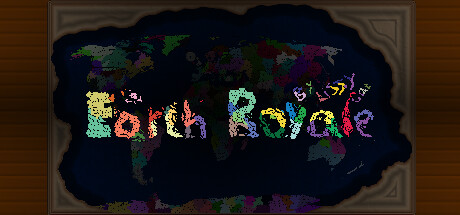
EarthRoyale, developed and published by Lizzycat (Lizabeth Gidlund), is an unusual and hypnotic experiment in world simulation that blurs the line between strategy game and abstract art piece. Rather than giving the player direct control over armies, diplomacy, or economics, it invites them to become a passive observer of a living, evolving planet. Each turn brings a new event—sometimes small, sometimes catastrophic—that reshapes the geopolitical landscape. Countries expand, fragment, rise to dominance, or vanish entirely as the world map continuously redraws itself. The appeal of EarthRoyale lies in its unpredictability and simplicity, a sandbox where chaos reigns supreme and history rewrites itself before your eyes. At its heart, EarthRoyale is less a game to play than a simulation to watch. The player sets the stage by choosing the map, the regions, and the rules governing how events unfold. You can start with a familiar Earth, or a stylized world divided into hundreds of provinces, each one capable of shifting allegiance or forming new nations. Once the simulation begins, control is surrendered to the algorithm, which randomly selects from a pool of events that alter the map’s borders and balance of power. A peaceful era may suddenly end with a flood or a civil war; a tiny island nation may unexpectedly conquer half a continent; an empire might fracture overnight into smaller independent states. The results can be absurd, dramatic, or eerily plausible, and that randomness gives EarthRoyale its strangely meditative quality. Every run becomes its own alternate history, a story with no author and no predictable outcome. The game’s minimalist presentation serves its purpose well. The map, rendered in simple 2D pixel style, is divided into clear color-coded regions representing different nations. The aesthetic is reminiscent of digital cartography tools rather than traditional video game visuals, emphasizing information and clarity over spectacle. Each border shift, each new nation that emerges, is immediately visible, and the clean style allows the player to focus on the ebb and flow of global change without distraction. The simplicity also gives the simulation a certain elegance—it feels stripped down to its purest form, a visualization of geopolitics as a living system. The soundscape is intentionally understated, reinforcing the contemplative atmosphere as you watch the map pulse and transform. What makes EarthRoyale engaging for long stretches is the sheer range of events that can occur. Some are small-scale adjustments, like minor annexations or local rebellions, while others are world-altering cataclysms: floods that erase coastlines, nuclear wars that scorch continents, or union events that merge neighboring cultures into sprawling superstates. These occurrences are drawn from a combination of random selection and contextual logic, meaning outcomes are never entirely arbitrary but still carry an element of surprise. It is this unpredictability that sustains curiosity—each new turn brings a sense of anticipation, the thrill of wondering which part of the world will change next. Watching empires rise and crumble in minutes can be oddly addictive, not because the player can influence them, but precisely because they cannot. The absence of direct control is both the defining strength and the greatest limitation of EarthRoyale. It offers a refreshing departure from traditional grand strategy games that demand constant decision-making, instead embracing the fascination of observation. It feels almost like a simulation toy rather than a game—something to leave running in the background, to check on periodically as the digital world evolves. This passivity is relaxing, but it can also lead to monotony after a while. Without deeper systems such as diplomacy, resource management, or internal politics, the simulation eventually becomes repetitive, with familiar patterns emerging after long runs. The fun lies in the first fe…
This is delightful! It’s exactly what it claims to be: a random event generator that changes borders on a map. Kind of like playing Crusader Kings on spectator mode. I clicked through for an hour and a half until the entire world united. It’s simple, but surprisingly fun to watch the chaos unfold and see how the world shifts. Good times! Definitely worth a try if you want to kill some time or just enjoy watching things change in a satisfying, laid-back way.
Random stuff happens, you have no control, I think it's just for YouTubers to watch and react to, more of a mixed rating 6/10
Да: серьёзных проблем нет. Оценка GameHealth - C: мнения разделились: недовольных почти столько же, сколько довольных.
Нет, Steam не указывает русский язык у этой игры.
Нет, это однопользовательская игра.
Видеокарта: минимум - Intel(R) HD Graphics 500 и 1 ГБ памяти. Сравнить со своим ПК можно в блоке системных требований выше.
Да, Steam Deck Verified - проверено Valve.
320 руб. в Steam.
 Динамика игры