СТАТУС ИГРЫ
C
Да, стоит играть
Серьёзных проблем нет, минусы описаны ниже
Почему оценка C: мнения разделились: недовольных почти столько же, сколько довольных
Данные SteamОбновлено 15 минут назад
Серьёзных проблем нет, минусы описаны ниже
Почему оценка C: мнения разделились: недовольных почти столько же, сколько довольных
1
350 дней назад
Нет отзывов за последние 30 дн.
Русский + ещё 7 языков
208 руб.
Сравним с вашим ПК и прикинем FPS
Подробных отзывов на русском мало - добавлены отзывы на других языках.
Its an interesting concept but once you get far enough into a level I find that the objects actually start clipping into each other and creates this popcorn-y type of bouncing that never stops, it's extremely hard to keep all of your objects inside the play area without them clipping into each other and rubber banding slamming into another object that was originally alright.
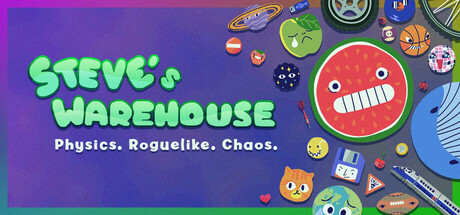
Steve's Warehouse: Physics. Roguelike. Chaos. takes the basic satisfaction of combining matching objects and expands it into an unpredictable mixture of physics puzzles, roguelike progression, and strategic experimentation. Developed by Definitely Named Steve and published by Abiding Bridge and Definitely Named Steve, it begins with an immediately understandable objective but quickly becomes far more complicated than simply dropping identical objects together. Playing as an alien warehouse worker sorting an increasingly ridiculous collection of human belongings, you must create matches, earn points and money, and keep the available space from becoming an uncontrollable pile of objects. The physics system gives the gameplay much of its personality. Objects do not conveniently remain where they are placed, and their different shapes and sizes can cause unexpected rolling, bouncing, shifting, and collisions. A carefully prepared arrangement can deteriorate after one unfortunate placement, while a seemingly hopeless pile can occasionally produce a fortunate chain reaction. This uncertainty makes each decision interesting because positioning is never completely predictable. There are moments when the physics can feel more troublesome than strategic, but the resulting chaos is clearly part of the intended experience rather than something the game tries to hide. More than 70 objects are divided among eight families, and the differences between these categories are important. The selection extends well beyond conventional fruit, introducing animals, transportation, storage items, celestial bodies, sports equipment, letters, and other strange additions. Individual categories bring distinctive behaviors into the warehouse. Sports balls can benefit from bouncing against surfaces, animals can interact with other object types, and certain unusual pieces introduce movement or rotation that changes how the available space must be approached. Unlocking unfamiliar objects therefore feels more meaningful than simply discovering another cosmetic variation. The roguelike side becomes especially noticeable through a large collection of passive upgrades. More than 40 passives can alter scoring, object behavior, physics, or the overall structure of a run. Some effects are practical improvements, while others deliberately push the game toward absurdity. Objects might begin rotating, explosions can become valuable, and particularly extreme modifiers can transform everything into cars. These abilities encourage experimentation because an upgrade that appears questionable on its own can become useful when paired with the right object family or another passive effect. This system also gives individual runs their identity. One attempt might revolve around maintaining a controlled arrangement and steadily building valuable matches, while another can become an unstable chain of bouncing or rotating objects. Money introduces another consideration because purchasing decisions affect how quickly a build develops. Rather than having complete access to an ideal strategy from the beginning, players need to work with the opportunities presented during each attempt. Adapting to imperfect circumstances is consequently just as important as understanding the basic merging mechanics. There is room for additional depth in how the eight families interact directly with one another. The game contains cross-family possibilities and passives that encourage unusual combinations, but not every category forms an equally elaborate relationship with every other one. Specialized approaches can consequently feel more immediately effective than ambitious mixed setups. Considering how creative the underlying premise is, an even larger network of direct object interactions could have pushed the strategic side further. Even so, the existing variety is substantial enough to make discovering combinations one of the main attractions. Seven arenas help prevent the core loop from f…
It's suika game as a roguelike, exactly what it says on the tin. There's a bunch of categories of items, each with their own focuses and mechanics. It's simple, sweet and fairly enjoyable. I don't think it has that much staying power, but it was so cheap that I'm likely gonna get my moneys worth of enjoyment out of it ^^
Да: серьёзных проблем нет. Оценка GameHealth - C: мнения разделились: недовольных почти столько же, сколько довольных.
Сейчас в Steam 1 чел., в среднем за 30 дней - 1.
Да: интерфейс. Русской озвучки нет.
Нет, это однопользовательская игра.
Видеокарта: минимум - Nvidia GeForce 9600 GT or AMD Radeon HD 2400 и 2 ГБ памяти. Сравнить со своим ПК можно в блоке системных требований выше.
Да, Steam Deck Verified - проверено Valve.
208 руб. в Steam.
 Динамика игры