СТАТУС ИГРЫ
B
Да, стоит играть
Серьёзных проблем нет, минусы описаны ниже
Почему оценка B: большинство хвалит, но недовольных заметно больше, чем у игр с A
Данные SteamОбновлено 2 часа назад
Серьёзных проблем нет, минусы описаны ниже
Почему оценка B: большинство хвалит, но недовольных заметно больше, чем у игр с A
Нет игроков онлайн в Steam - это не определяет готовность одиночного режима · последнее известное значение, ещё не обновлено
1942 дня назад
Нет отзывов за последние 30 дн.
Русского нет · всего 5 языков
360 руб.
Сравним с вашим ПК и прикинем FPS
Подробных отзывов на русском мало - добавлены отзывы на других языках.
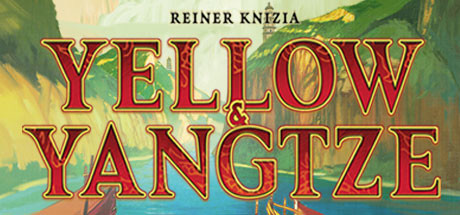
FOR MORE CARD AND BOARD GAMES FOLLOW US CARD GAME KING Yellow & Yangtze is a digital adaptation of the well-received board game from a well known designer. Unfortunately, it's not the one I'm familiar with so this review will be about the game, rather than the adaptation. As I only review single player aspect, multiplayer won't be covered. At its heart Y&Y is a map control game. Because many pieces are not player owned, it's often possible to take advantage of another player's point generation set up - and the game is all about exploiting such weaknesses in defense and learning to live with your own. Since only the lowest resource will be scored players will have to switch strategies and setup, often abandoning the previous ones making each game very dynamic and strategic. I found the matches to be quick but filled with tactical decision making as you weigh on how best to spend your only two actions per turn. It might take a few games to fully understand the rules, but thankfully the tutorial and the in-game rule reference are both well designed and teach the game step by step (conveniently there is also a video tutorial on YT for the digital game). The UI is clean and thankfully there is the much needed undo button, as well an easy way to check what different components do. For the solo player the AI seems capable and the the 7 scenario mini campaign works well as an extended tutorial with special setups. All in all the short matches coupled with tactical decision making makes this an easy recommendation. Favorite mechanics • The way point generation is designed creates a natural tug-of-war. The positive + Quick matches and quick turns + Strategically deep + Good UI and accessible rule reference + Good tutorial + Good solo support with AI and mini-campaign + Music is nice The neutral * None The negative - Very minor remark, but the undo button can undo a complete series of actions instead of the latest Conclusion: A good strategic board game with map control that requires sharp decision making and offers quick matches with tactical depth. Recommended, 7.5/10.
Very useful to learn the game. Nice graphics, quite good tutorial. Problems: the AI is weak: if I can win at higher level, it means it's very very weak! I can't see a list of my games Navigating the map is not always easy and sometimes the content of am hexagon is hidden behind 3d stuff such as pagodas.
Yellow & Yangtze, developed and published by Dire Wolf, is the kind of digital board-game adaptation that reminds you how elegant, ruthless, and psychologically tense strategy games can be when translated with care. Based on Reiner Knizia’s acclaimed tabletop design, it embraces the core philosophy that simple rules can produce complex, emergent competition. Set in ancient China during a period of political upheaval, the game casts players as rival governors attempting to build influence across five distinct domains—military, agriculture, trade, culture, and governance—by placing leaders and tiles across a hex-based map of warring states. But what truly differentiates it from other strategy titles is its victory condition: your final score is determined not by your best-performing domain, but by your weakest. That single rule forces a style of play defined not by domination, but by balance, restraint, anticipation, and humility. From the moment the game begins, the digital interface makes a strong impression. Dire Wolf has long experience adapting board games to screens, and it shows here—the UI is clear, polished, and responsive, with just enough animation to make the map feel alive without slowing the pace. Tiles drop into place satisfyingly, pagodas rise with celebratory flair, and conflicts unfold with surprising visual clarity for what is fundamentally an abstract strategy game. Tutorials and tooltips do an excellent job easing new players into the game’s structure, guiding them through actions such as placing leaders, connecting kingdoms, initiating revolts, and triggering full-scale wars. Because the tabletop original can feel intimidating at first glance, this onboarding is essential, and the adaptation succeeds in making a dense strategy ruleset feel accessible without watering it down. Gameplay is where Yellow & Yangtze truly earns its praise. Every turn provides only two actions, and that restriction creates constant tension—there is always something useful you cannot do yet, and deciding what to prioritize becomes a psychological negotiation between long-term planning and short-term survival. Tiles gradually form kingdoms, and placing leaders allows you to draw points from those structures, but kingdoms also become fragile as they grow. A single revolt can unseat a leader, while a well-timed external invasion can merge kingdoms and create devastating conflicts. Because wars are resolved by tile count rather than random chance, the game feels fair even when brutal. Strategy becomes emotional: you learn to read opponents, predict desperation moves, disguise intent, and bait conflicts you know you can win. It is a tense, dynamic ecosystem where every placement shifts the entire strategic landscape. For solo players, the AI provides a respectable challenge. It understands timing, recognizes weaknesses, and punishes greed, making it a useful partner for learning and improvement. However, long-term replay value shines brightest in multiplayer—especially asynchronous or online play—where human unpredictability injects drama the AI can’t replicate. Because the smallest mistake can lead to cascading territorial changes, matches often evolve into quiet psychological duels, where restraint becomes more powerful than boldness. And unlike many strategy games where runaway leaders dictate an inevitable outcome, the weakest-domain scoring rule ensures surprising reversals until the final turn. A player dominating militarily may still lose if they neglected trade or agriculture, which encourages constant self-assessment rather than victory laps. Presentation and technical performance support the experience rather than distract from it. The art direction is respectful, minimalist, and atmospheric, using stylized Chinese-inspired motifs rather than cartoon exaggeration. Music is subtle but fitting, allowing concentration without becoming repetitive. System requirements are extremely low, making the game widely accessible, and…
Да: серьёзных проблем нет. Оценка GameHealth - B: большинство хвалит, но недовольных заметно больше, чем у игр с A.
Нет, Steam не указывает русский язык у этой игры.
Да, в неё играют против других людей по сети.
Видеокарта: минимум - Graphics card with DX11 or OpenGL 3.x capabilities и 2 ГБ памяти; рекомендуется Graphics card with DX11 or OpenGL 3.x capabilities и 4 ГБ. Сравнить со своим ПК можно в блоке системных требований выше.
360 руб. в Steam. Ключи на GGsel - от 209 ₽.
Стратегии
Steam · обновлено 3 часа назад

Экшен
Steam · обновлено 3 часа назад
Казуальные
Steam · обновлено 7 часов назад
 Динамика игры