СТАТУС ИГРЫ
D
Да, стоит играть
Серьёзных проблем нет, минусы описаны ниже
Почему оценка D: отзывы в основном плохие
Данные SteamОбновлено 8 минут назад
Серьёзных проблем нет, минусы описаны ниже
Почему оценка D: отзывы в основном плохие
Нет игроков онлайн в Steam - это не определяет готовность одиночного режима
613 дней назад
Нет отзывов за последние 30 дн.
Русский + ещё 10 языков
880 руб.
Сравним с вашим ПК и прикинем FPS
Подробных отзывов на русском мало - добавлены отзывы на других языках.
A fun simple game . I was surprised how much fun I ended up having lol . Good lore Good environment Good game play After their campaign make sure you have some one else to play with so you can continue to enjoy this game 💪🏻
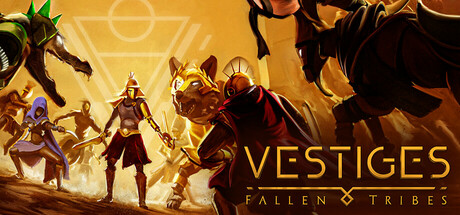
Vestiges: Fallen Tribes is an inventive strategy title that merges the sensibilities of tabletop board games, deck-building, and autobattler design into a cohesive experience built equally for traditional PC play and virtual reality. Developed and published by WanadevStudio, the game situates players in a bleak, science-fiction future where water scarcity has fractured civilization into rival tribes locked in perpetual conflict. Rather than relying on sprawling maps or real-time micromanagement, Vestiges: Fallen Tribes frames its battles as carefully staged confrontations on a compact, board-like battlefield, emphasizing foresight, positioning, and strategic preparation over reflexes. The core gameplay revolves around turn-based card deployment and automated combat resolution. Each turn, players draw from a customized deck representing their chosen tribe and spend limited energy to summon units onto specific spaces on the board. Once placed, units act independently, engaging enemies based on proximity, priority, and inherent abilities. This creates a compelling dynamic where the most important decisions happen before combat begins. Success depends on reading the battlefield, anticipating enemy placements, and sequencing card plays effectively, rather than reacting mid-fight. The result is a satisfying tension between planning and execution, where victories feel earned through clever preparation rather than mechanical dexterity. A major strength of Vestiges: Fallen Tribes lies in the asymmetry between its playable factions. Each tribe has a distinct identity, reflected in its unit types, playstyle, and strategic strengths. Some tribes favor aggressive early pressure, overwhelming opponents with fast deployments, while others excel at control, durability, or calculated counterattacks. This diversity encourages experimentation and makes deck construction a meaningful part of the experience. Tweaking a deck to refine synergies or adapt to a specific opponent becomes just as important as performance during individual matches, adding depth and replayability to the game’s systems. The single-player campaign serves as both a narrative framework and a gradual onboarding process. Missions introduce new mechanics, unit types, and tactical challenges at a steady pace, allowing players to learn organically while remaining engaged. Story elements are delivered through brief narrative segments that flesh out the world and its conflicts without overwhelming the player with exposition. While the broader lore remains somewhat understated, the campaign does a solid job of contextualizing battles and giving purpose to each encounter. Tactical variety within missions helps keep progression engaging, even as environments remain relatively consistent in appearance. Visually, the game adopts a stylized diorama approach that reinforces its tabletop inspiration. Units animate with clarity and personality, making it easy to read combat outcomes at a glance, while the board itself feels like a living strategic space rather than a static grid. This design choice becomes especially impactful in virtual reality, where the battlefield is presented as a tangible object you can observe from multiple angles. In VR, placing cards and watching units spring to life carries a tactile satisfaction that elevates the strategic layer, making decisions feel physical and deliberate rather than abstract menu interactions. Multiplayer adds another layer of depth by introducing human unpredictability into the mix. Facing real opponents forces players to adapt more quickly, as both sides deploy units without knowing the other’s intentions in advance. Bluffing, counter-decking, and reading opponent behavior become important skills, giving PvP matches a different rhythm from the more structured campaign scenarios. However, the game’s relatively small player base can make matchmaking inconsistent, and competitive longevity may depend heavily on playing with friends or c…
4 hours is all it takes to complete the main story campaign that was dull and uninteresting. After completing the the game there is no way to play random missions solo only pvp which is dead. There are only 3 maps and 3 factions which while they are good are boring... this is not a 25$ game maybe for 5.99-10 it would be worth it.
Да: серьёзных проблем нет. Оценка GameHealth - D: отзывы в основном плохие.
Да: интерфейс. Русской озвучки нет.
Да, в неё играют против других людей по сети.
Видеокарта: минимум - NVIDIA GTX 1060 equivalent и 8 ГБ памяти. Сравнить со своим ПК можно в блоке системных требований выше.
Да, Steam Deck Playable - запускается, но что-то может потребовать настройки.
880 руб. в Steam.
 Динамика игры