Да, стоит играть
Возражений нет. Нюансы - ниже.

Возражений нет. Нюансы - ниже.
Нет игроков онлайн в Steam - это не определяет готовность одиночного режима
238 дней назад
77.8% положительных
Русского нет · всего 2 языка
262 руб.
Те же жанры Steam, вердикт «Да», сначала самые живые.
Публичная выборка отзывов из Steam. Вердикт считается по цифрам, тексты на него не влияют.
77,8% положительных за 30 дней
Steam не вернул достаточно отзывов на языке интерфейса - здесь показана выборка на всех языках.
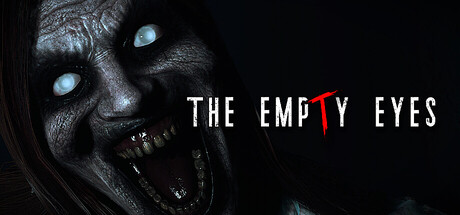
The Empty Eyes is a first-person psychological horror game that turns a seemingly straightforward investigation into an increasingly disturbing encounter with the supernatural. Developed and published by 99 Grados Games, it favors slow-building tension, environmental investigation, and psychological uncertainty over combat-heavy survival mechanics. Its strongest idea is remarkably simple: making the player feel watched even when there is no obvious threat standing in the room. That persistent uncertainty gives otherwise ordinary corridors, doors, shadows, and empty spaces an uncomfortable significance. The story places the player in the role of a private detective investigating the disappearance of an influential lawyer. What begins as a professional missing-person case soon develops into something considerably darker when evidence suggests that the lawyer may be connected to several other disappearances. Exploring his residence becomes the central focus of the investigation, with documents, objects, symbols, and environmental details gradually revealing fragments of the truth. This detective framework works particularly well for psychological horror because it provides a believable reason to keep searching rooms that common sense might otherwise suggest abandoning immediately. Exploration forms the foundation of the gameplay. Instead of relying on complicated combat systems or constant enemy encounters, the game asks players to carefully observe their surroundings and investigate anything that appears significant. Documents and environmental clues help reconstruct the events surrounding the disappearances, while increasingly strange discoveries suggest that the mystery cannot be explained entirely through ordinary criminal activity. Progress is relatively focused, making this more of a guided horror experience than an expansive adventure with numerous branching objectives. The house is especially important to the overall experience. At first it resembles a believable residential environment, but familiarity gradually gives way to uncertainty. Darkness, unusual imagery, architectural distortions, and supernatural disturbances make previously harmless locations feel threatening. The game effectively exploits the fear of returning to an area and wondering whether something has changed. Even when nothing immediately happens, the possibility that something could be different encourages the player to examine familiar surroundings more cautiously. One of the more interesting choices is how the supernatural presence operates. Rather than functioning exclusively as a conventional monster that must constantly be fought or escaped, it manipulates perception and reinforces the sensation that the protagonist is being observed. This allows the game to create fear without depending entirely on direct confrontation. A dark doorway can become intimidating simply because the player cannot confidently determine what might be beyond it. The approach is particularly effective for players who prefer psychological tension to repeated chase sequences. Sound design strengthens this atmosphere considerably. Silence is allowed to remain for meaningful periods instead of every room being filled with dramatic music. Quiet exploration makes smaller noises more noticeable and encourages players to listen carefully for indications of movement or another presence. When unsettling sounds or supernatural events interrupt that silence, they carry greater impact. Headphones are particularly suitable for this type of experience because directional and environmental audio contribute substantially to the feeling of vulnerability. Visually, the game embraces dark interiors and realistic first-person presentation while introducing increasingly unnatural imagery as the investigation progresses. Lighting and shadow frequently obscure portions of the environment, encouraging cautious exploration without making every frightening moment completely obvious. Distor…
not worth the money i paid, too much on the riddle side but lack of horror
El juego ha empezado muy bien y los sustos dan bastante miedo, pero la historia se desencamina muy rápido a un walking simulator que ademas las cosas que tienes que coger te lo marcan con una pequeña flecha que a veces no ves y te pasas 2 horas andando. Sinceramente, me suda los cojones que 17 mujeres murieran en noseque casa yo solo queria un juego de miedo. 1.75/5 estrellas. Aunque por 6 euros he de decir que esta aceptable la experiencia