СТАТУС ИГРЫ
A
Да, стоит играть
Серьёзных проблем нет, минусы описаны ниже
Почему оценка A: отзывы хорошие, но до S не хватает почти единодушной похвалы
Данные SteamОбновлено 4 часа назад
Серьёзных проблем нет, минусы описаны ниже
Почему оценка A: отзывы хорошие, но до S не хватает почти единодушной похвалы
Нет игроков онлайн в Steam - это не определяет готовность одиночного режима · последнее известное значение, ещё не обновлено
380 дней назад
100% положительных
Русского нет · всего 2 языка
100 руб.
Сравним с вашим ПК и прикинем FPS
Подробных отзывов на русском мало - добавлены отзывы на других языках.
This wasn’t a chill, throwaway party game at all. It was a surprisingly strict condition=management simulator. If you’re hoping to casually chat while cooking takoyaki, this game will definitely get in your way; though that interference often turns out to be the fun part. Still, if you’re someone who can find humor and interest in that silliness, you might end up having a more memorable experience than expected. After your main games are over, when four people just want to fool around for a bit, give it a try. You can always force the takoyaki onto someone else.
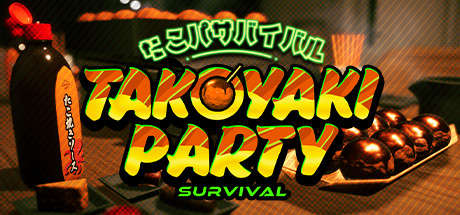
Takoyaki Party Survival, developed and published by KIMIDORI SOFT, is a playful yet cleverly designed indie game that takes an everyday social activity and reimagines it as a survival challenge built around nutrition, timing, and human interaction. At first glance, the idea sounds intentionally absurd: survive as long as possible while eating nothing but takoyaki. Yet beneath that humorous premise lies a surprisingly thoughtful system that turns food preparation, bodily limits, and multiplayer chaos into the heart of the experience. The game wears its silliness proudly, but it also commits fully to its mechanics, resulting in something far more engaging than a novelty joke. The core loop revolves around cooking and consuming takoyaki while carefully managing your character’s nutritional balance. Each ingredient contributes differently to protein, carbohydrates, fats, and overall calories, and the player must constantly adjust their cooking choices to remain viable. Eating too much or making poorly balanced takoyaki can leave your character overly full, unable to eat further and at risk of losing the run. This forces players to actively manage their body state by performing actions like squats to burn calories and regain the ability to eat. What makes this loop compelling is how tactile and immediate it feels—every decision has a visible consequence, turning what could have been a simple clicker-style system into a light but engaging form of survival management. Where Takoyaki Party Survival truly comes alive is in its multiplayer design. Supporting up to four players online, the game leans heavily into social dynamics that blur the line between cooperation and competition. Players can cook takoyaki for one another, share ingredients, or sabotage rivals by stealing food at critical moments. These interactions create an unpredictable social rhythm, especially in quick matches with strangers, where trust is fleeting and opportunism is constant. Friend matches, on the other hand, often turn into loud, chaotic sessions filled with jokes, petty revenge, and improvised strategies. The game understands that its strongest moments emerge not from rigid rules, but from the behavior of the people playing it. Progression adds another layer of depth without overwhelming the player. As runs extend and experience accumulates, new ingredients become available, expanding the strategic space considerably. With over twenty components to experiment with, players can test unconventional combinations that challenge traditional expectations of what takoyaki “should” be. Alongside this, character skills provide small but meaningful improvements, such as better metabolism efficiency or more effective calorie-burning actions. These upgrades subtly reward long-term play and experimentation, making repeated runs feel purposeful rather than repetitive. Occasional special events, like calorie-free eating phases, shake up the balance and offer brief windows where players can recover or take risks they’d normally avoid. Visually and tonally, the game embraces simplicity and charm. The presentation is clean and functional, prioritizing clarity over visual excess, which suits its party-game structure well. Animations and character reactions emphasize humor and exaggeration rather than realism, reinforcing the lighthearted atmosphere. Sound design and music stay unobtrusive, letting player reactions and multiplayer interactions become the dominant audio experience. While it doesn’t aim for high production values, the game’s aesthetic consistency helps maintain its identity and keeps the focus firmly on mechanics and social play. That said, Takoyaki Party Survival is very much a game that knows its audience. Its appeal lies in repetition, experimentation, and shared laughter rather than narrative depth or complex systems. Solo play can be enjoyable as a test of optimization and endurance, but the experience is undeniably richer with other players involved…
It’s way more fun than I expected. Sitting there and trying to survive. Btw love that you can help your friends or snatching their takoyaki
Да: серьёзных проблем нет. Оценка GameHealth - A: отзывы хорошие, но до S не хватает почти единодушной похвалы.
Нет, Steam не указывает русский язык у этой игры.
Да, есть кооператив по сети.
Видеокарта: минимум - Nvidia Geforce GTX 650 or AMD Radeon HD 7750 и 4 ГБ памяти; рекомендуется Nvidia GeForce GTX1050Ti or AMD Radeon RX560 и 4 ГБ. Сравнить со своим ПК можно в блоке системных требований выше.
Да, Steam Deck Playable - запускается, но что-то может потребовать настройки.
100 руб. в Steam.
 Динамика игры