СТАТУС ИГРЫ
C
Да, стоит играть
Серьёзных проблем нет, минусы описаны ниже
Почему оценка C: мнения разделились: недовольных почти столько же, сколько довольных
Данные SteamОбновлено 5 минут назад
Серьёзных проблем нет, минусы описаны ниже
Почему оценка C: мнения разделились: недовольных почти столько же, сколько довольных
Нет игроков онлайн в Steam - это не определяет готовность одиночного режима · последнее известное значение, ещё не обновлено
404 дня назад
33.3% положительных
Русского нет · всего 5 языков
1600 руб.
Сравним с вашим ПК и прикинем FPS
Подробных отзывов на русском мало - добавлены отзывы на других языках.
I have a lot of good memories of Galactic Attack (Rayforce) on the Saturn, but this version just doesn't do it for me. The controls are glitchy and sometimes the ship just drifts off in a random direction unexpectedly, or continues moving after you've stopped pressing the d-pad. Usually it's only an inch or two, but once it went halfway across the whole screen. And the controls feel a bit mushy and laggy in general. Raystorm seemed fine (I only played one level), but Raycrisis seemed as bad or worse than Rayforce. Plus, I was more interested in Rayforce to begin with . . . honestly the latter two games with the full 3D haven't aged nearly as well, and Raycrisis in particular uses perspectives and angles that interfere with the gameplay. I've never had control issues like this with any other shmup. Just this game. But they may not be universal because I would expect reviews to be lower if everyone had them. Overall, I think it's only worth it if you get it on sale, test during the refund period, and are a big fan of the Ray games. I thought I'd really like this but I was surprised at how badly Crisis and Storm have aged compared to the Darius series. These games don't even remotely touch G Darius or Darius Gaiden and that's where I'd recommend starting on Taito shmups.
While not as well known as Darius, the "Ray" series is another staple of Taito in the golden age of the 1990s. Not many may have had the luck to play those games in arcades, but they received even respectable PC ports back in the day, RayStorm being apparently the most widely available (I should even have a budget release from those years sitting somewhere), while RayCrisis was limited to Japan. The main gimmick is the lock-on laser: using the reticle in front of the ship to acquire targets, destruction can be rained down on enemies and structures outside of the main plane of action, although the second and third games allow you to target enemies that can be reached by the main cannon, too. They were not the first shmups to have secondary weapons needed for specific enemies, but they perfected the concept, as those homing lasers are among the most satisfying weapons in the genre; I think of the times when you can whittle down incoming enemy squadrons before you effectively face them, or when you see one beam still not reaching its target after several seconds, and then a large spaceship explodes. Of note in all three games are also the soundtracks, available both in original arcade and remixed versions. While not as experimental and surreal as the music for the Darius entries from the same years, they are among the many excellent works of Taito's internal music group Zuntata, which was on fire at the time. Many are likely to agree that RayForce - aka Layer Section, Gunlock, and the lame Galactic Attack; is this a record for alternate titles? - is still the best of the trilogy, even just by virtue of its superb 2D pixel art graphics, which also make great use of parallax and scaling effects, looking in some ways more three-dimensional than many 2.5D games. The levels also proceed seamlessly, without transitions, as the ship fights a desperate battle that starts in space, then descends to Earth with the final objective of reaching its core corrupted by Con-Human. The version here also comes with a welcome tate mode (aka rotating the image 90 degrees, so as to use the full screen on monitors that can be rotated). RayStorm suffers from dated 3D graphics and from being developed for horizontal screens, which makes the action feel more cramped; it also uses more traditional level transitions. An HD remaster with many visual improvements was released in 2010 on consoles but it's not included here; the "Neo-HD" version is simply a resolution increase and upscale of the original. Far from a bad game, though: there's a second ship with narrower main fire but more targets that can be acquired by the laser, and the 3D is used to make the backgrounds twist and turn in interesting ways, making the action more dynamic while still within a 2D plane; the battle among an enemy fleet is my favourite. Some ships transforming into robots and viceversa are quite cool. RayCrisis, besides the better art direction and the "battle inside cyberspace" theme that have made its 3D graphics age more gracefully and look even better in HD, was and still is an interesting experiment: short runs but, except for the introduction and final boss, different levels randomly selected from a pool, and the classic score input moved to the beginning, as it becomes a unique username for players to have their progress tracked and even repeat a run if they so wish. A more controversial mechanic is the Encroachment, a value that must be kept low through consistently excellent performance so as to earn the privilege of fighting an extra boss and getting an extended ending; it's very hard to achieve even at low difficulty levels. While M2 has done the usual excellent porting work, along with the useful "gadgets" to fill the parts of the screen not occupied by the games' original aspect ratios, the collection is regrettably based exclusively on the arcade versions. No RayStorm HD, as observed, no old console versions like G-Darius HD including the PS1 port; all that i…
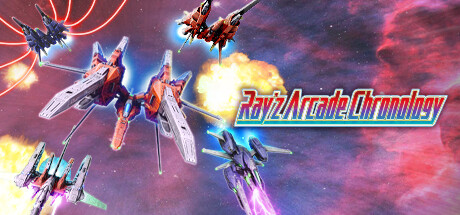
Ray’z Arcade Chronology is a lovingly crafted collection that preserves one of Taito’s most influential shoot-’em-up franchises for modern audiences. Developed by M2 and published by TAITO, this compilation brings together RayForce, RayStorm, RayStorm neo-HD, RayCrisis, and RayCrisis HD, creating a comprehensive showcase of a series that played a significant role in the evolution of arcade shooters. Rather than feeling like a simple bundle of old games, the collection presents itself as a historical journey through the growth of the genre, highlighting how each installment expanded upon the ideas introduced by its predecessor. The defining feature of the Ray series is its innovative lock-on laser system, a mechanic that continues to stand out even decades after its debut. Players are challenged to engage enemies across multiple layers of the battlefield, targeting threats above and below while managing waves of incoming fire. This adds a strategic dimension that separates the games from many traditional shooters that rely solely on quick reflexes. The mechanic remains engaging throughout the collection, rewarding precision, planning, and mastery while delivering the satisfying spectacle of destroying entire groups of enemies with a well-timed attack. RayForce remains an exceptional example of classic arcade design. Its futuristic presentation, memorable stage progression, and carefully balanced difficulty create an experience that still feels remarkably fresh. The game excels at building atmosphere through its visual style and pacing, drawing players into a large-scale science-fiction conflict while maintaining tight and responsive gameplay. Despite its age, it demonstrates why it earned a reputation as one of the most respected vertical shooters of its era. RayStorm marks the franchise’s transition into the world of 3D graphics. While many games struggled during the industry's move from sprites to polygons, RayStorm successfully retained the series’ identity. The original version offers a fascinating snapshot of arcade gaming in the late 1990s, while RayStorm neo-HD provides an updated visual presentation with enhanced clarity and smoother visuals. The result is a game that bridges nostalgia and modernization, allowing both longtime fans and newcomers to appreciate its strengths. The collection’s darkest and most experimental entry is RayCrisis. With its cybernetic themes, unique progression structure, and more intense atmosphere, it pushes the series into new territory. The game introduces additional layers of challenge and complexity that encourage repeated playthroughs. Both the original and HD versions capture the title’s distinctive personality, offering an experience that feels more ambitious and emotionally charged than many arcade shooters of its time. One of the collection’s greatest strengths is the work performed by M2, a developer widely respected for arcade preservation. The package includes numerous quality-of-life features designed to make these demanding games more approachable. Save states, replay functions, practice options, and performance tracking tools allow players to learn mechanics at their own pace while also supporting advanced score-chasing strategies. These additions enhance accessibility without compromising the authenticity of the original arcade experience. The soundtrack across the series deserves special recognition. The music perfectly complements the futuristic settings, blending atmospheric electronic compositions with energetic battle themes. Each title benefits from a distinctive audio identity that amplifies the excitement of gameplay while reinforcing the mood of its science-fiction worlds. Even years after their original release, many of the tracks remain memorable and contribute significantly to the franchise’s enduring appeal. While the collection excels as a preservation effort, it is not entirely flawless. Some players may have appreciated a larger selection of historical…
Да: серьёзных проблем нет. Оценка GameHealth - C: мнения разделились: недовольных почти столько же, сколько довольных.
Нет, Steam не указывает русский язык у этой игры.
Да, есть кооператив на одном экране.
Видеокарта: минимум - intelHD Graphics630 / Radeon RX 560(VRAM 4GB) и 8 ГБ памяти; рекомендуется NVIDIA GTX1060 (VRAM 6GB) / Radeon RX 580 (VRAM 4GB) и 8 ГБ. Сравнить со своим ПК можно в блоке системных требований выше.
Да, Steam Deck Verified - проверено Valve.
1600 руб. в Steam. Ключи на GGsel - от 2301 ₽.
 Динамика игры