СТАТУС ИГРЫ
C
Да, стоит играть
Серьёзных проблем нет, минусы описаны ниже
Почему оценка C: мнения разделились: недовольных почти столько же, сколько довольных
Данные SteamОбновлено 2 часа назад
Серьёзных проблем нет, минусы описаны ниже
Почему оценка C: мнения разделились: недовольных почти столько же, сколько довольных
Нет игроков онлайн в Steam - это не определяет готовность одиночного режима · последнее известное значение, ещё не обновлено
761 день назад
0% положительных
Русского нет · всего 6 языков
515 руб.
Сравним с вашим ПК и прикинем FPS
Подробных отзывов на русском мало - добавлены отзывы на других языках.
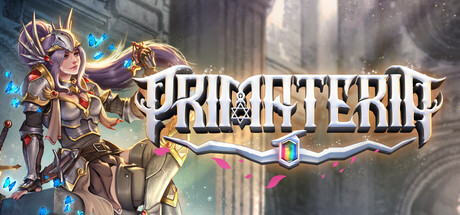
Карточный баттлер с элементами рогалика, где главная фича-призываемые существа мы можем объединять посредством наличия у нас соответствующих карт в руке во все более сильных. Выглядит визуально игра очень прилично, геймплей хорошо отработан и достаточно сбалансирован. Практически у каждой карты есть своя особенность, так что механик выигрывания боев достаточно, так как в наличие разные колоды. Во время пробежек пополняем свой запас существ. Для любителей жанра еще один пример удачной игры. Геймплей https://youtu.be/tYh8XI1BpsM Куратор инди https://store.steampowered.com/curator/37645702-Unknown-indie/
Yugioh + Hearthstone + Slay The Spire with some adjustments that make the Yugioh actually work. Fusions regress to their original cards when you destroy them, meaning you still have material even if you lose your boss monster. You can attack a target with multiple creatures, meaning that walling is more about building up board interactions rather than just having a high stat card. Beating over creatures damages life points, 1 per, and players have 10 LP. There's three front row and two back row slots, and the back row can't be attacked until the front is gone. All of this makes the board state actually quite dynamic. You can rotate your enemy's cards to open up vulnerabilities, swarm over big creatures, take a lot of damage if you don't protect your swarm, tactically steal and debuff and discard creatures to open up weakpoints, etc. You are still reliant on your hand not bricking, but every fusion draws you a card and so it's *much* less bad than it could be. The art, design, and writing are also charming. They're weird and indie, but they work, and I'll take club penguin illustration homages over ai slopcards any day. I'll update the review as I play deeper, but if you like indie ccgs this is a pretty solid one at first glance. Edit: Oh yeah you can get extremely bricked still lmao. Statistically it shouldn't happen too often, but if it happens you do just lose the run. Drawing on damage helps mitigate, and it's not nearly as bad as yugioh or other yugiohlikes, but it can be a little frustrating in a roguelike format.
Primateria, developed by Yfrit Games and published by Surefire.Games, is a roguelike deck-builder that embraces unpredictability, experimentation, and mechanical freedom as its defining traits. Rather than mimicking the structure of more rigid card battlers, it builds itself around a fusion-based system where cards can be combined, transformed, empowered, and even reimagined mid-combat. This design makes Primateria feel far more fluid than the typical turn-based deck-builder. The game encourages improvisation not only because you can play multiple cards without the usual mana restrictions, but because card evolution — and de-evolution — is part of its core loop. Each run becomes a sandbox of shifting strategies, a place where even weak cards can grow into powerhouse tools with the right fusion or where a strong card may revert and force you to pivot quickly. The world that frames these mechanics is equally imaginative. Primateria casts you as a “Polupus,” a strange being navigating a mythic, surreal universe populated by gods, esoteric creatures, and cosmic threats. The story mode gives this strange universe context, but it’s the visual direction and conceptual creativity that make the world feel alive. Enemies, abilities, relics, and even card art reflect the game’s surreal themes, giving the experience a sense of mystical tension. Rather than being a simple backdrop, the world serves as a thematic extension of the game’s chaotic philosophy: everything is mutable, everything changes form, and nothing remains fixed for long. This reinforces the idea that each run isn’t merely a sequence of battles but a journey through a volatile universe where adaptability is the ultimate skill. Primateria’s greatest strength lies in its variety and flexibility. With more than a hundred cards spanning multiple abilities, elemental synergies, and fusion paths, no two decks play the same. The roguelike structure ensures that even a strong knowledge of the card pool doesn’t guarantee predictable outcomes. Some runs feel blessed with perfect synergies; others demand ingenuity and resourcefulness. The ability to fuse cards mid-battle creates dynamic turns where a single decision can snowball into powerful combos or collapse into unintended consequences. These moments — the improvised victories, the narrow escapes, the accidental power spikes — are the heart of Primateria’s appeal. They make each run feel distinctive, rewarding players who enjoy discovery and experimentation. The game also benefits from a generous suite of modes. Beyond the main story, there are prebuilt decks for learning, endless modes for pushing limits, and later updates added features like a deck editor and boss rush. These additions significantly extend replay value, providing multiple ways to explore the fusion system and the card pool. For players who enjoy tuning builds, experimenting with archetypes, or pushing themselves against escalating difficulty, the game offers a solid amount of content and customization. The steady stream of updates and patches also reflects a clear commitment from the developers, helping balance out mechanics and adding features requested by the community. However, the same elements that make Primateria feel fresh can also make it uneven or overwhelming. The randomness at the core of its design — from card rewards to combat pacing — can sometimes make runs feel more dependent on luck than strategy. While many roguelikes embrace randomness, Primateria’s fusion-driven system can amplify that volatility, especially when a few unlucky fusions derail a promising deck. Players who prefer structured, controlled deck-building may find this philosophy frustrating. Similarly, the learning curve may feel steep, not because the rules are complicated individually, but because there are so many interacting systems: adaptive mana, dual graveyard mechanics, card evolution tiers, positioning, and varying combat synergies all contribute to its complexity.…
Да: серьёзных проблем нет. Оценка GameHealth - C: мнения разделились: недовольных почти столько же, сколько довольных.
Нет, Steam не указывает русский язык у этой игры.
Нет, это однопользовательская игра.
Видеокарта: минимум - NVIDIA GTX 660 и 2 ГБ памяти; рекомендуется NVIDIA GTX 770 и 4 ГБ. Сравнить со своим ПК можно в блоке системных требований выше.
515 руб. в Steam.
Экшен
Steam · обновлено 21 час назад

Приключения
Steam · обновлено 20 часов назад

Приключения
Steam · обновлено 20 часов назад
 Динамика игры