СТАТУС ИГРЫ
B
Да, стоит играть
Серьёзных проблем нет, минусы описаны ниже
Почему оценка B: большинство хвалит, но недовольных заметно больше, чем у игр с A
Данные SteamОбновлено 5 часов назад
Серьёзных проблем нет, минусы описаны ниже
Почему оценка B: большинство хвалит, но недовольных заметно больше, чем у игр с A
4
3146 дней назад
Нет отзывов за последние 30 дн.
Русского нет · всего 1 язык
133 руб.
Сравним с вашим ПК и прикинем FPS
Подробных отзывов на русском мало - добавлены отзывы на других языках.
Игра очень классная,играл в детстве когда маленький был,только тут прям лица даже персонажей видно) Люблю инди игры,особенно в 2D когда вид как то с верху)Но головой тут думать нужно,не простая головоломка)
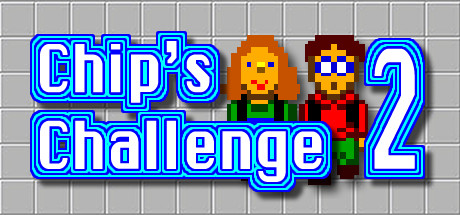
Chip’s Challenge 2, developed and published by Niffler Ltd., is a long-awaited sequel that carries a unique legacy. For over two decades, it existed as an unreleased project—complete but trapped in licensing disputes—before finally emerging on Steam in 2015. This history alone gives the game a kind of mythical status among puzzle enthusiasts, especially those who grew up playing the original Chip’s Challenge on platforms like Windows 3.1 and Atari Lynx. When the sequel finally arrived, it was not reimagined or modernized, but presented almost exactly as it had been conceived in the 1990s—a pure continuation of its predecessor’s design philosophy. The result is a game that feels both nostalgic and timeless, retaining the intellectual charm and mechanical precision of the original while expanding upon its complexity with hundreds of new puzzles and elements. At its foundation, Chip’s Challenge 2 continues the grid-based puzzle structure that defined the original. Players guide Chip—or occasionally Melinda, his fellow puzzle solver—through intricate levels made up of tiles that represent terrain, traps, switches, and collectibles. The goal is simple in concept but devilishly layered in execution: collect the necessary microchips scattered throughout the map in order to unlock the exit and proceed to the next stage. The sequel introduces a wealth of new mechanics that greatly expand the range of puzzle design. Players can now pick up and drop items, manipulate railroad tracks, use teleporters and switches, and contend with more varied enemy behavior. Each element interacts with others according to strict internal logic, creating a chain of cause-and-effect that demands meticulous planning. The introduction of Melinda as an alternate playable character adds subtle but meaningful variety, as she interacts differently with certain tiles and environmental hazards, requiring players to rethink strategies even in familiar settings. The game’s structure unfolds gradually, easing the player into its complex logic over the course of its two hundred levels. Early puzzles reacquaint players with familiar mechanics—keys, locks, ice tiles, and water boots—before layering in new features that test adaptability and observation. The learning curve is steady but deceptive; by the middle levels, the puzzles become truly labyrinthine, forcing players to juggle multiple objectives while anticipating every possible interaction between tiles and items. The brilliance of Chip’s Challenge 2 lies in this layered puzzle design. Solutions are rarely about dexterity or timing but about deduction and experimentation, rewarding players who are patient, methodical, and willing to think several moves ahead. Every level feels like a small, self-contained piece of logic architecture, and when all the moving parts finally click into place, the satisfaction is immense. However, that satisfaction does not come easily. As the difficulty escalates, Chip’s Challenge 2 can become punishingly demanding. Certain levels rely on memorization or trial and error rather than pure logic, leading to moments of frustration when small mistakes force a complete restart. Some puzzles hide critical information behind what feels like unfair design—teleporters that lead to unexpected traps or items that must be used in a specific order with no margin for improvisation. The difficulty curve is uneven, likely a reflection of the game’s long and fragmented development. Some levels flow elegantly and reward creative problem-solving, while others feel like endurance tests for the most stubborn players. Yet even in its harsher moments, there is an underlying consistency in its logic; once the solution is known, it always makes perfect sense in retrospect. This adherence to fair, deterministic puzzle rules is what keeps it engaging despite the occasional frustration. Visually, the game is unapologetically old-school. It retains the tile-based presentation of its predecessor, with pixela…
I played the MS version of the original Chip's Challenge a lot as a kid. I'm 10 years late to the party on this sequel, but I feel like it's actually a stronger game. The greater variety of tools and traps may seem overwhelming at first, but they quickly become second nature, and offer greater complexity to the puzzles without making them too confusing. The puzzles in general are stronger here as well - gone are the long and monotonous rooms of the original, repeating the same task over and over, or dealing with blob RNG. Something about the way the levels are constructed feels like a more satisfying evolution, which is just what a good sequel should be
Да: серьёзных проблем нет. Оценка GameHealth - B: большинство хвалит, но недовольных заметно больше, чем у игр с A.
Сейчас в Steam 4 чел., в среднем за 30 дней - 4.
Нет, Steam не указывает русский язык у этой игры.
Нет, это однопользовательская игра.
Да, Steam Deck Playable - запускается, но что-то может потребовать настройки. Игроки ProtonDB ставят оценку Silver.
133 руб. в Steam.
 Динамика игры