СТАТУС ИГРЫ
B
Да, стоит играть
Серьёзных проблем нет, минусы описаны ниже
Почему оценка B: большинство хвалит, но недовольных заметно больше, чем у игр с A
Данные SteamОбновлено 4 часа назад
Серьёзных проблем нет, минусы описаны ниже
Почему оценка B: большинство хвалит, но недовольных заметно больше, чем у игр с A
Нет игроков онлайн в Steam - это не определяет готовность одиночного режима · последнее известное значение, ещё не обновлено
26 дней назад
100% положительных
Русского нет · всего 1 язык
200 руб.
Сравним с вашим ПК и прикинем FPS
Подробных отзывов на русском мало - добавлены отзывы на других языках.
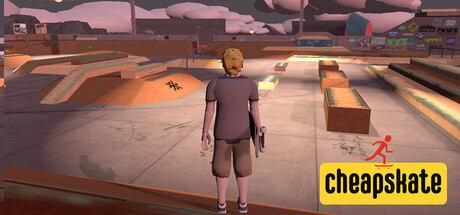
Cheapskate is an independently developed skateboarding experience that prioritizes creativity, accessibility, and freedom over complicated simulation mechanics. Developed by Simple Dev Studio and published by D'Amato Productions, this Early Access title draws inspiration from classic arcade skateboarding games while incorporating modern sandbox elements. Its central philosophy revolves around allowing players to explore environments, experiment with tricks, and develop their own skating style without excessive restrictions. Rather than delivering a heavily structured sports simulation, it presents an open-ended playground where personal improvement and experimentation become the primary motivations. Although its unfinished presentation is immediately noticeable, the underlying concept demonstrates genuine potential for players who appreciate straightforward, skill-based skateboarding. The gameplay emphasizes responsive controls and predictable arcade physics, making it approachable for newcomers while retaining enough mechanical complexity to interest experienced players. Unlike realistic skateboarding simulators that demand precise analog movements and careful weight distribution, Cheapskate relies on digital inputs designed to produce consistent results. Players can execute aerial tricks, grind along rails, slide across ledges, and combine different maneuvers into increasingly elaborate sequences. The emphasis on responsiveness makes experimenting with different approaches enjoyable, particularly when attempting to connect multiple obstacles into one continuous skating line. However, the simplicity of the controls does not necessarily translate into effortless mastery. Learning how to maintain momentum, position the skateboard correctly, and execute combinations efficiently still requires practice. One of the game's strongest qualities is its commitment to unrestricted experimentation. Rather than forcing players through a predetermined series of objectives, it encourages them to discover interesting routes and develop personal challenges. A simple ramp can become the foundation for an elaborate trick sequence, while a collection of rails and ledges can inspire numerous approaches depending on timing and positioning. This freedom creates an appealing gameplay loop where improvement comes from curiosity rather than mandatory progression. Players who enjoy repeatedly practicing difficult maneuvers may find considerable satisfaction in refining their technique. Conversely, those who prefer clearly defined missions, substantial rewards, and structured campaigns may find the experience lacking direction. Environmental design plays an important role in supporting this creative philosophy. The available skating locations are constructed around obstacles that encourage movement, experimentation, and continuous combinations. Ramps, rails, platforms, and ledges provide opportunities to develop different techniques, while the general layout encourages players to search for efficient routes between obstacles. The environments are functional rather than visually elaborate, reflecting the project's ongoing development. Although their simplicity allows players to concentrate on skating, the absence of extensive environmental detail can make extended sessions feel repetitive. Additional locations, greater visual diversity, and more distinctive obstacle arrangements would significantly improve exploration and replayability. The game's multiplayer approach is particularly appealing because it avoids unnecessary account requirements and complicated online systems. Players can host private sessions and invite friends through connection codes, allowing them to share environments and observe one another performing tricks. This straightforward system complements the relaxed nature of the experience, turning ordinary skating sessions into opportunities for friendly competition and collaborative experimentation. Offline single-player support…
pls buy this to support the devs, the game is barebones rn as it is in alpha but it was pretty fun for 12 minutes when i completed everything, it's going in a great direction
The bones of a great arcade skate game are here, shes pretty rough right now but with a bit of love it could be a lot of fun waiting to see what the dev does with it
Да: серьёзных проблем нет. Оценка GameHealth - B: большинство хвалит, но недовольных заметно больше, чем у игр с A.
Нет, Steam не указывает русский язык у этой игры.
Да, есть кооператив по сети и на одном экране и по локальной сети.
Видеокарта: минимум - NVIDIA GeForce GT 1030 и 0.0078125 ГБ памяти. Сравнить со своим ПК можно в блоке системных требований выше.
200 руб. в Steam.
 Динамика игры