СТАТУС ИГРЫ
A
Да, стоит играть
Серьёзных проблем нет, минусы описаны ниже
Почему оценка A: отзывы хорошие, но до S не хватает почти единодушной похвалы
Данные SteamОбновлено 1 час назад
Серьёзных проблем нет, минусы описаны ниже
Почему оценка A: отзывы хорошие, но до S не хватает почти единодушной похвалы
Нет игроков онлайн в Steam - это не определяет готовность одиночного режима · последнее известное значение, ещё не обновлено
391 день назад
100% положительных
Русского нет · всего 1 язык
465 руб.
Сравним с вашим ПК и прикинем FPS
Подробных отзывов на русском мало - добавлены отзывы на других языках.
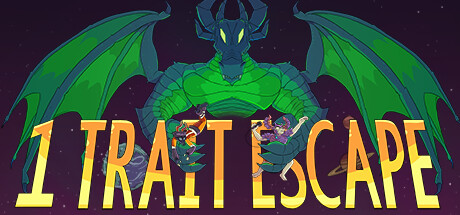
1 Trait Escape is a frantic, surreal roguelite action game that fully embraces chaos, humor, and repetition as core pillars of its design. Developed by Andrew Katz and Jeremy Collette and published by 1 Trait Danger in collaboration with Matador Records, the game exists in a strange space between bullet-hell shooter, arcade endurance test, and absurdist comedy experiment. It is unapologetically weird, deliberately punishing, and constantly unpredictable, creating an experience that feels less like a conventional progression-driven game and more like a relentless attempt to survive long enough to make sense of the madness unfolding on screen. The narrative setup is intentionally ridiculous and sets the tone immediately. Players control Stoney and Trait, two unlikely protagonists who accidentally end up on a rocket to Mars instead of boarding a flight to London. This mistake lands them in a bizarre, terraformed Martian world that resembles a warped medieval England ruled by an authoritarian king. The story unfolds in fragments through dialogue, encounters, and environmental cues, never pausing the action for lengthy exposition. Rather than guiding the player through a traditional plot arc, the narrative functions as a comedic framework that justifies the game’s wild shifts in tone, enemy design, and setting. Gameplay is built around short, intense runs that throw players into top-down combat arenas filled with aggressive enemies and dense projectile patterns. Movement and positioning are crucial, as enemy attacks often flood the screen with hazards that require constant awareness and precise dodging. The combat loop is fast and demanding, rewarding players who can quickly read attack patterns and adapt on the fly. Failure is frequent and expected, reinforcing the roguelite structure where death is not a setback but a learning tool that gradually sharpens player skill. Between combat encounters, the game regularly disrupts its own rhythm with unexpected minigames and challenges. These segments can feel jarring at first, as they often introduce completely different mechanics or objectives with little warning. Over time, however, these interruptions become part of the game’s identity, contributing to its sense of unpredictability and dark humor. They prevent the experience from becoming too mechanically rigid, even if they occasionally feel unfair or confusing in the moment. Boss encounters serve as major skill checks and highlights of each run. These fights tend to combine complex movement requirements with layered attack patterns that push the game firmly into bullet-hell territory. Bosses are visually distinct and mechanically aggressive, demanding full concentration and mastery of movement rather than brute-force damage output. Losing to a boss often feels inevitable on early attempts, but repeated runs gradually turn frustration into familiarity as patterns become readable and survivable. Progression in 1 Trait Escape is incremental and closely tied to persistence. As players fail and restart, new abilities, upgrades, and refinements unlock, subtly shifting the balance in the player’s favor. This progression never fully removes the game’s difficulty, but it provides just enough forward momentum to encourage repeated attempts. The sense of growth comes as much from player improvement as from mechanical upgrades, reinforcing the idea that success is earned through adaptation rather than grinding. Visually, the game adopts a stylized 3D presentation that supports its chaotic tone. Environments, enemies, and characters feel intentionally exaggerated, blending medieval imagery with sci-fi absurdity in ways that often defy logic. The visual clutter can be overwhelming at times, but it complements the game’s identity as an assault on the senses. Sound design reinforces this intensity, with sharp audio cues, frantic effects, and comedic touches that underline the game’s refusal to take itself seriously, even at its most punis…
this game is awesum but u cant crak .Tommy or Tim Schemenvasectomy Scheneduty Schehenuty you know whwat i mean. *** you
MY TRAITS!! THEY ESCAPED!!! THEY'RE GONE!!!! But seriously it's such a fun game if you like 1 trait dangers humour you'll surely enjoy this game
Да: серьёзных проблем нет. Оценка GameHealth - A: отзывы хорошие, но до S не хватает почти единодушной похвалы.
Нет, Steam не указывает русский язык у этой игры.
Нет, это однопользовательская игра.
Видеокарта: минимум - NVIDIA® GeForce® GTX 600 series, AMD Radeon™ HD 7000 series и 6 ГБ памяти; рекомендуется NVIDIA® GeForce® GTX 1060/ GeForce® GTX 1650 or AMD R9 380/AMD RX 6400 or Intel® Arc™ A770 и 8 ГБ. Сравнить со своим ПК можно в блоке системных требований выше.
Да, Steam Deck Playable - запускается, но что-то может потребовать настройки.
465 руб. в Steam.
 Динамика игры